
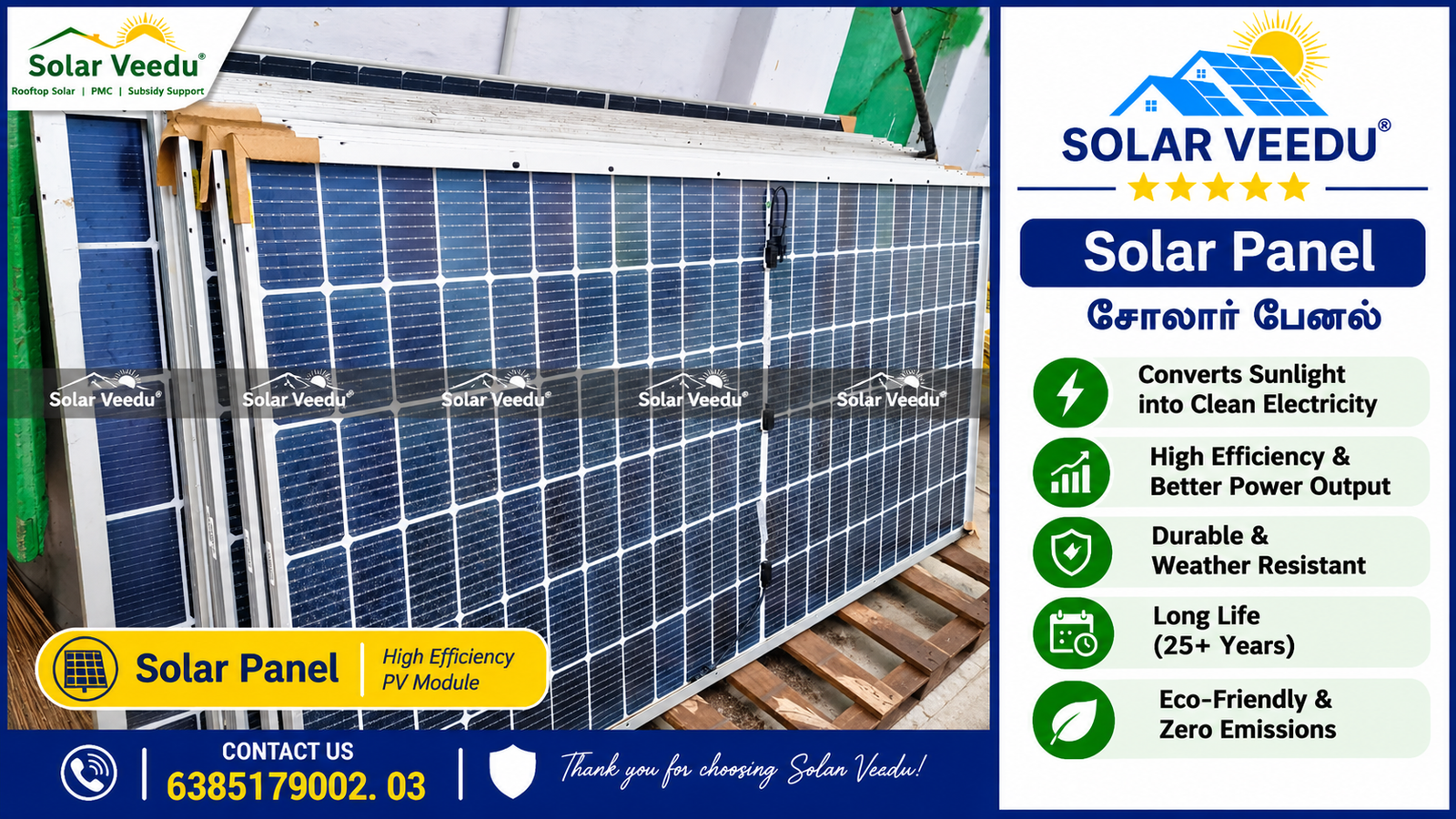
Solar Panels are the primary components of a rooftop solar power system. They capture sunlight and convert it into electricity using photovoltaic (PV) technology.
For residential rooftop solar installations, high-quality solar panels help generate clean electricity, reduce dependence on grid power and support long-term energy savings.
Video
What is a Solar Panel?
A Solar Panel is an electrical device made up of multiple photovoltaic (PV) cells that convert sunlight directly into electrical energy.
When sunlight falls on the solar cells, they generate DC (Direct Current) electricity, which is supplied to the solar inverter for conversion into AC (Alternating Current) electricity used by household electrical appliances.
The main components of a solar panel may include:
-
Photovoltaic (PV) Solar Cells
-
Tempered Glass
-
Encapsulant Layers
-
Solar Cell Interconnections
-
Protective Backsheet or Rear Glass
-
Aluminium Frame
-
Junction Box
-
Solar Connector Cables
How Does a Solar Panel Work?
Solar panels work using photovoltaic technology.
When sunlight reaches the photovoltaic cells, the cells generate DC electricity. This electricity travels through suitable solar cables to the inverter.
The solar inverter converts DC electricity into AC electricity, which can be used to power household appliances.
The electricity generated depends on several factors, including:
-
Solar Panel Capacity
-
Sunlight Availability
-
Panel Orientation and Tilt
-
Roof Shading Conditions
-
Installation Quality
-
Temperature and Weather Conditions
A properly designed rooftop solar system helps make effective use of available sunlight.
Importance of Quality Solar Panels for Rooftop Solar Installation
-
Helps generate clean and renewable electricity.
-
Reduces dependence on conventional grid electricity.
-
Supports long-term household energy savings.
-
Provides reliable power generation when properly installed.
-
Makes efficient use of available rooftop space.
-
Supports environmentally friendly energy production.
-
Helps reduce household carbon emissions.
Main Components of a Solar Panel
1. Photovoltaic (PV) Solar Cells
Solar cells capture sunlight and convert solar energy into DC electricity through the photovoltaic effect.
2. Tempered Glass
The front glass protects the solar cells from environmental exposure and provides durability.
3. Aluminium Frame
The aluminium frame provides structural support and helps secure the solar panel during installation.
4. Encapsulant Layers
Encapsulant materials protect the solar cells and electrical connections inside the panel.
5. Junction Box
The junction box is installed at the rear of the solar panel and provides electrical connection points for the generated DC power.
6. Solar Connector Cables
These cables connect solar panels to other components of the solar power system through suitable connectors.
7. Protective Backsheet or Rear Glass
The rear protective layer provides electrical insulation and environmental protection, depending on the panel design.
Why Choose Solar Veedu?
Solar Veedu provides residential rooftop solar installation services with attention to solar panel selection, installation quality and overall system performance.
Our solar installation support includes:
-
Residential Solar Panel Installation
-
High-Efficiency Solar Panel Selection
-
Rooftop Solar Panel Mounting
-
Solar Panel Wiring and Connections
-
Solar Inverter Installation
-
Solar Electrical Protection Setup
-
Solar System Installation Guidance
-
Rooftop Solar Maintenance Support
We focus on proper installation practices and suitable solar system configurations for residential properties.
Frequently Asked Questions
1. What is the purpose of a Solar Panel?
A solar panel converts sunlight into DC electricity using photovoltaic cells. This electricity can be converted into AC power through a solar inverter for household use.
2. Why are solar panels important for rooftop solar systems?
Solar panels are the primary electricity-generating components of a rooftop solar system. They help generate renewable electricity from sunlight.
3. What materials are used in a Solar Panel?
A solar panel generally consists of photovoltaic cells, tempered glass, encapsulant layers, an aluminium frame, a junction box, connectors and a protective backsheet or rear glass.
4. How much electricity can a Solar Panel generate?
Electricity generation depends on the panel's rated capacity, sunlight availability, installation direction, tilt angle, shading and weather conditions.
5. How long do Solar Panels last?
Solar panel service life depends on the manufacturer, product quality and operating conditions. Many modern solar panels come with performance warranties of 25 years or more. Actual product and warranty terms vary by manufacturer.
6. Do Solar Panels require regular maintenance?
Solar panels require periodic inspection and cleaning when necessary to remove dust, dirt and other deposits that may affect power generation.
Contact Solar Veedu
Planning a residential rooftop solar installation or looking for high-quality solar panels for your home?
Contact Solar Veedu for professional rooftop solar installation guidance and suitable solar solutions.
Website: https://solarveedu.com/
Phone: 6385179002 / 6385179003